
 uk
uk 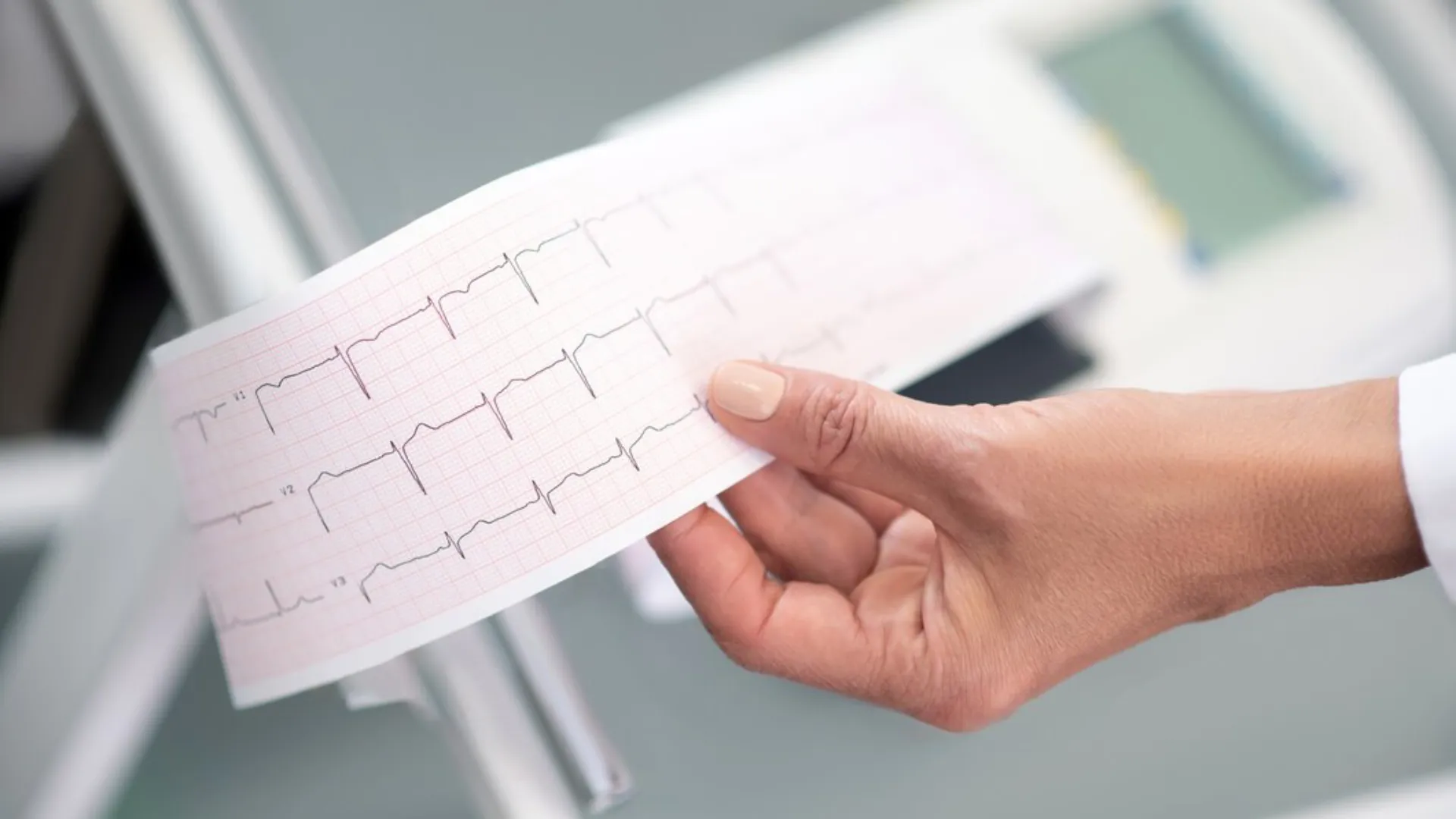
24-hour ECG monitoring (Holter) is a non-invasive study that allows assessment of your heart’s function over 24 hours. This method helps detect heart rhythm disturbances that are not always visible during standard examination.
ECG monitoring using the Holter method is an important tool for early diagnosis of heart diseases. The device records the heart’s electrical activity throughout the day, allowing the doctor to detect even temporary or rare disturbances that may be unnoticeable during standard examination. This study is especially useful for patients with suspected arrhythmias, angina, heart attacks, and other cardiac pathologies.

Indications
Suspected heart rhythm disorders (arrhythmias)
Periodic chest pain or shortness of breath that cannot be explained by other causes
Dizziness or fainting
Identifying patients at high risk of heart disease
Monitoring the effectiveness of heart disease treatment
Family history of heart disease
Contraindications
Allergy to electrodes or adhesive used during monitoring
Skin conditions in the electrode placement area
Severe mental disorders where the patient cannot follow recommendations
Presence of a defibrillator or pacemaker
How is the procedure performed?
The 24-hour ECG monitoring procedure is a simple and painless process that includes several stages:
1.5 hours
-
(01)
Preparation for the procedure 10 minutesBefore installing the Holter monitor, the doctor will conduct a consultation and explain to the patient how to wear the device throughout the day. After this, special electrodes are applied to the patient’s chest, which will record the heart’s electrical impulses. This stage takes only a few minutes.

-
(02)
Installing the Holter device 5 minutesAfter applying the electrodes, the patient is fitted with the device. It is secured to the belt or neck, and all wires are connected to the electrodes. The monitor ensures continuous recording throughout the day, while the patient may not feel any discomfort.
-
(03)
Monitoring period (24 hours) 15 minutesThe patient continues to live their normal life, while the device records all electrical impulses of the heart. During the monitoring period, it is necessary to avoid water immersion (shower, bath), as well as heavy physical exertion.
-
(04)
Device removal 5 minutesAfter the end of the day, the patient comes to the clinic, where the medical professional removes the device and electrodes. This stage takes several minutes.
-
(05)
Results analysis 15 minutesAfter device removal, the doctor analyzes the obtained data. This allows detection of even rare or temporary heart rhythm disturbances that were not visible during standard examinations.
Our clients' reviews
Opinions about us worth hearing
Обережна жінка
Найкращий уролог, який тільки може бути! Обережна,чуйна! З золотими руками! За 4 роки ходіння по інших лікарях ,3 операціях ,лише Наталія Леонідівна вирішила проблему,за що їй безмежно вдячна!
Kovalchuk Olena Petrovna
Головченко Дмітрій
Найкращий уролог, який тільки може бути! Обережна,чуйна! З золотими руками! За 4 роки ходіння по інших лікарях ,3 операціях ,лише Наталія Леонідівна вирішила проблему,за що їй безмежно вдячна!
Volkov Maxim Yurievich
Ірина
Найкращий гінеколог який тільки може бути! Обережна,чуйна! З золотими руками! За 4 роки ходіння по інших лікарях ,3 операціях ,лише Наталія Леонідівна вирішила проблему,за що їй безмежно вдячна!Найкращий гінеколог який тільки може бути! Обережна,чуйна! З золотими руками! За 4 роки ходіння по інших лікарях ,3 операціях ,лише Наталія Леонідівна вирішила проблему,за що їй безмежно вдячна!Найкращий гінеколог який тільки може бути! Обережна,чуйна! З золотими руками! За 4 роки ходіння по інших лікарях ,3 операціях ,лише Наталія Леонідівна вирішила проблему,за що їй безмежно вдячна!Найкращий гінеколог який тільки може бути! Обережна,чуйна! З золотими руками! За 4 роки ходіння по інших лікарях ,3 операціях ,лише Наталія Леонідівна вирішила проблему,за що їй безмежно вдячна!
Найкращий гінеколог який тільки може бути! Обережна,чуйна! З золотими руками! За 4 роки ходіння по інших лікарях ,3 операціях ,лише Наталія Леонідівна вирішила проблему,за що їй безмежно вдячна!
Lysenko Tetyana Ivanivna
Clinic values
taking care of your health


What is Holter monitoring?
Holter monitoring (or 24-hour ECG monitoring) is a method of continuous electrocardiogram recording for 24-48 hours (sometimes longer) using a portable device. Named after American biophysicist Norman Holter.
Indications for the procedure
Main recommendations:
- Standard: 24 hours
- If needed: 48-72 hours or even a week
Behavior rules during monitoring
Allowed:
- Normal daily activity
- Work (if not related to heavy physical exertion)
- Food without restrictions
- Driving (carefully)
- Sleep in normal position
Prohibited:
- Washing, shower, bath, sauna
- Swimming
- Intense physical exercise
- MRI and other procedures with electromagnetic radiation
- Chest X-ray
Caution:
- Mobile phones – keep more than 30 cm from the recorder
- Microwave ovens – do not stand close during operation
- Electric razors, hair dryers – use quickly
Keeping a diary
Mandatory to record:
- Time and nature of complaints (chest pain, palpitations, dizziness)
- Physical activity (climbing stairs, fast walking)
- Medication intake with exact time
- Emotional state (stress, anxiety)
- Sleep (time of falling asleep and waking up)
Example entry:
“08:30 – climbing stairs to 3rd floor, palpitations” “14:15 – chest pain while watching news, duration 5 minutes”
Possible complications and discomfort
Most common:
- Skin irritation from electrodes (especially in people with sensitive skin)
- Discomfort from wires during sleep
- Psychological discomfort from restrictions
Rare:
- Allergic reaction to electrode adhesive base
- Skin infection (with violation of hygiene rules)
Results interpretation
What the doctor evaluates:
- Average heart rate over 24 hours
- Minimum and maximum HR
- Circadian rhythms (day/night variations)
- Arrhythmias (their type, frequency, duration)
- Ischemic episodes (ST-segment depression)
- Heart rate variability
Normal values:
- Average HR: 60-100 bpm during day, 40-60 bpm at night
- Isolated extrasystoles: up to 100 ventricular and up to 1000 atrial per day
- Pauses: up to 2.5 seconds at night
Method advantages
Main benefits:
- Non-invasive – completely painless
- Informative – detects “hidden” rhythm disturbances
- Correlation possibility of symptoms with ECG changes
- Treatment effectiveness evaluation
- Prognostic value in ischemic heart disease
Disadvantages and limitations
Drawbacks:
- Discomfort from wearing the device
- Activity restrictions for 24 hours
- Possible artifacts from movement
- Doesn’t always “catch” rare arrhythmias
- Subjectivity of diary keeping
Alternative methods
When Holter is not suitable:
- Implantable loop recorders – for long-term monitoring
- Event recorders – activated by patient during symptoms
- Telemetric monitoring – in hospital
- Mobile apps with ECG function (Apple Watch, AliveCor)
Special considerations for different patient groups
Children:
- Require special approach to electrode fixation
- Parents should help with diary keeping
- Often use bright “pediatric” recorders
Elderly people:
- May need help with diary keeping
- More often have skin reactions to electrodes
- Need detailed explanation of rules
Pregnant women:
- Completely safe for mother and fetus
- Can detect pregnancy-related arrhythmias
- Helps assess the impact of hormonal changes on the heart
Cost and accessibility
In Ukraine:
- Public facilities: often free with referral
- Private clinics: 800-2000 UAH
- Waiting time: from several days to a month
Insurance coverage:
- Usually covered by medical insurance when indicated
Practical tips
Before the study:
- Choose a day with usual activity
- Prepare comfortable clothing
- Inform family about restrictions
During wearing:
- Do not touch electrodes unnecessarily
- Keep diary carefully
- If an electrode comes off – contact the clinic immediately
After removal:
- Carefully remove adhesive residue (with baby oil)
- If skin irritation occurs – use soothing cream
Current trends
New technologies:
- Wireless systems – no wires between electrodes and recorder
- Artificial intelligence for automatic analysis
- Smartwatches with ECG function
- Patch monitors – thin as a patch
Information source: Recommendations of the European Society of Cardiology (ESC), American Heart Association (AHA) and domestic protocols of the Ministry of Health of Ukraine.
Remember: this review is for informational purposes. The final decision about the need for the study and interpretation of results should be made by a cardiologist!